

Exploring the choice between Siding and Stucco can be a pivotal decision when it comes to the exterior of your home. This comparison delves into the nuances of each option, helping you make an informed choice tailored to your needs.
Introduction to Siding and Stucco
When it comes to choosing the exterior of your home, two popular options are siding and stucco. Both provide unique characteristics and aesthetics that can enhance the overall look of your property.
Materials, Textures, and Aesthetics
Siding is typically made from materials such as vinyl, wood, or fiber cement, offering a wide range of textures and colors to choose from. On the other hand, stucco is a cement-based mixture that can be textured or smooth, creating a more uniform and sleek appearance.
Benefits and Drawbacks
- Siding is known for its durability and low maintenance requirements, making it a cost-effective option for homeowners. However, it may be susceptible to damage from extreme weather conditions or pests.
- Stucco, on the other hand, is highly durable and fire-resistant, providing excellent insulation for homes. Yet, it can be more expensive to install and repair compared to siding.
Siding Types and Varieties
When choosing siding for your home, there are various materials and styles to consider. Each type of siding has its own unique features in terms of cost, installation, and maintenance. Let's explore the different siding types and varieties available:
Vinyl Siding
Vinyl siding is a popular choice due to its affordability and low maintenance. It comes in a wide range of colors and styles, making it versatile for different home designs. Installation is relatively easy, and vinyl siding is known for its durability against harsh weather conditions.
Wood Siding
Wood siding offers a classic, natural look to homes and can be made from various types of wood such as cedar, pine, or redwood. While wood siding requires more maintenance than other materials, it can be stained or painted to match your desired aesthetic.
The cost of wood siding can vary depending on the type of wood chosen.
Fiber Cement Siding
Fiber cement siding is a durable and low-maintenance option that mimics the look of wood or stucco without the same level of upkeep. It is resistant to rot, fire, and pests, making it a long-lasting choice for homeowners. Fiber cement siding can be more expensive upfront but can save money in the long run due to its longevity.
Metal Siding
Metal siding, such as aluminum or steel, is known for its strength and durability. It is resistant to fire, rot, and insects, making it a practical choice for areas with extreme weather conditions. Metal siding is available in various finishes and colors, offering a modern and sleek appearance to homes.
Popular Siding Styles
- Lap Siding: Also known as horizontal siding, lap siding is a traditional style that overlaps each other horizontally. It is versatile and can be made from various materials.
- Shingles: Shingle siding offers a unique texture to homes, resembling the look of wooden shingles. It can be made from materials like cedar or vinyl.
- Panels: Siding panels come in large, flat sheets and are available in different textures and patterns. They are easy to install and can provide a modern aesthetic to homes.
- Shakes: Shakes are thicker than shingles and offer a rustic appearance to homes. They can be made from wood, vinyl, or fiber cement.
Stucco Composition and Application
Stucco is a popular exterior finish known for its durability and versatility. Understanding the composition and application process of stucco is essential for homeowners considering this option for their homes.The composition of stucco typically includes a mixture of cement, sand, lime, and water.
These ingredients are combined to create a paste-like consistency that can be applied to exterior surfaces. The exact ratios of these components can vary depending on the desired texture and finish.
Application Process
- Base Coats: The application of stucco typically involves multiple layers. The first layer, known as the base coat, is applied directly to the surface and helps create a strong bond. This layer is usually made of cement, sand, and lime.
- Finish Coats: Once the base coat has dried, one or more finish coats are applied. These coats can vary in texture and color, allowing for customization based on the homeowner's preferences.
Textures and Finishes
- Smooth Finish: A smooth finish provides a clean and modern look to the exterior of a home. This finish is achieved by troweling the stucco to create a flat surface.
- Rough Finish: For a more textured appearance, a rough finish can be applied. This finish adds depth and visual interest to the exterior walls.
- Patterned Designs: Stucco can also be used to create intricate patterns and designs on the exterior of a home. These patterns can range from simple geometric shapes to more elaborate motifs.
Cost Considerations
When deciding between siding and stucco for your home's exterior, cost is a crucial factor to consider. The initial installation costs, as well as long-term maintenance expenses, can vary significantly between these two options. Let's delve into the cost considerations of siding and stucco to help you make an informed decision.
Cost of Installation
- Siding: The cost of siding installation can range from $6 to $15 per square foot, depending on the material chosen. Common siding materials include vinyl, wood, fiber cement, and metal. Labor costs will also vary based on the complexity of the project and the region.
- Stucco: Stucco installation typically costs between $6 to $9 per square foot. While stucco material costs are lower than some premium siding options, the labor costs can be higher due to the specialized skills required for stucco application.
Long-Term Cost Implications
- Siding: While siding may have lower upfront installation costs, it may require more maintenance over time. Factors such as painting, repairs, and potential replacement can add to the long-term expenses of siding.
- Stucco: Stucco, on the other hand, is known for its durability and minimal maintenance requirements. With proper care, stucco can last for decades without the need for frequent repairs or repainting, potentially saving money in the long run.
Factors Influencing Cost
- Size of the Project: The size of the exterior project, measured in square footage, will directly impact the overall cost of installation for both siding and stucco. Larger projects will require more materials and labor, increasing the total expenses.
- Location: Regional labor rates, material availability, and climate conditions can all influence the cost of siding and stucco installation. Areas with higher labor costs or specific building requirements may lead to higher overall project costs.
Climate Suitability
When considering the exterior finish for your home, it is essential to take into account the climate conditions of your area. The performance of siding and stucco can vary based on factors such as heat, cold, rain, and snow. Let's explore how each option fares in different climates and which one might be the best choice for you.
Siding Performance in Different Climates
- Siding is a popular choice in areas with fluctuating temperatures as it provides insulation against both heat and cold.
- Vinyl siding is durable and resistant to moisture, making it suitable for rainy climates.
- Fiber cement siding is known for its ability to withstand extreme weather conditions, including high winds and hail.
Stucco Performance in Different Climates
- Stucco is ideal for dry and arid climates, as it can help regulate indoor temperatures by absorbing and releasing heat slowly.
- In areas with heavy rainfall, stucco may require more maintenance to prevent water damage and mold growth.
- In cold climates, stucco can be prone to cracking due to freeze-thaw cycles, requiring proper installation and maintenance.
It is crucial to consider the specific climate challenges in your region when choosing between siding and stucco for your home's exterior.
Maintenance and Durability
When it comes to the maintenance and durability of siding and stucco, understanding the differences can help you make an informed decision for your home's exterior.
Maintenance Requirements
- Siding typically requires regular cleaning to remove dirt, mold, and mildew buildup. This can be done with a gentle soap and water solution or a pressure washer.
- Painting may be needed every 5-10 years for certain types of siding to maintain its appearance and protect it from the elements.
- Repairs for siding may involve replacing damaged panels or fixing loose pieces to prevent water infiltration.
Durability Against Elements
- Siding is generally prone to damage from moisture, especially wood-based sidings, but newer materials like vinyl and fiber cement are more resistant to water damage.
- Pests like termites and carpenter ants can be a concern for certain types of siding, particularly wood siding, requiring regular inspections and treatments.
- Fading can occur over time due to sun exposure, especially with darker colored sidings, leading to the need for repainting or refinishing.
Tips for Prolonging Lifespan
- Regularly inspect siding for any signs of damage or wear and address them promptly to prevent further deterioration.
- Keep gutters clean to prevent water from overflowing onto the siding, causing potential water damage.
- Consider applying a protective sealant or coating to extend the lifespan of both siding and stucco.
Last Point
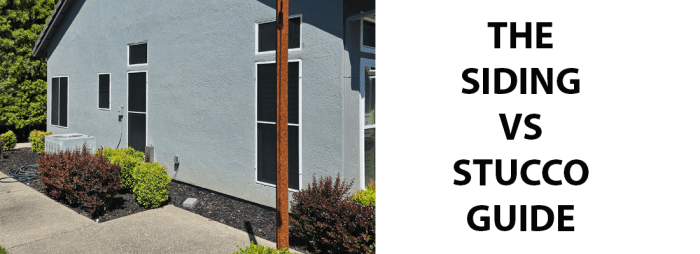
In conclusion, the debate between Siding and Stucco offers a myriad of considerations for homeowners. By weighing the pros and cons of each, you can select the exterior finish that aligns best with your preferences and requirements.
FAQ Overview
Is stucco more expensive than siding?
Stucco tends to have a higher upfront cost compared to siding, but it can offer better durability and insulation in the long run.
Which is easier to maintain, siding or stucco?
Siding often requires more frequent maintenance such as painting, while stucco is generally low maintenance but may need occasional repairs.
Can stucco be used in all climates?
Stucco can be used in various climates, but it may require specific additives or treatments to withstand extreme weather conditions.